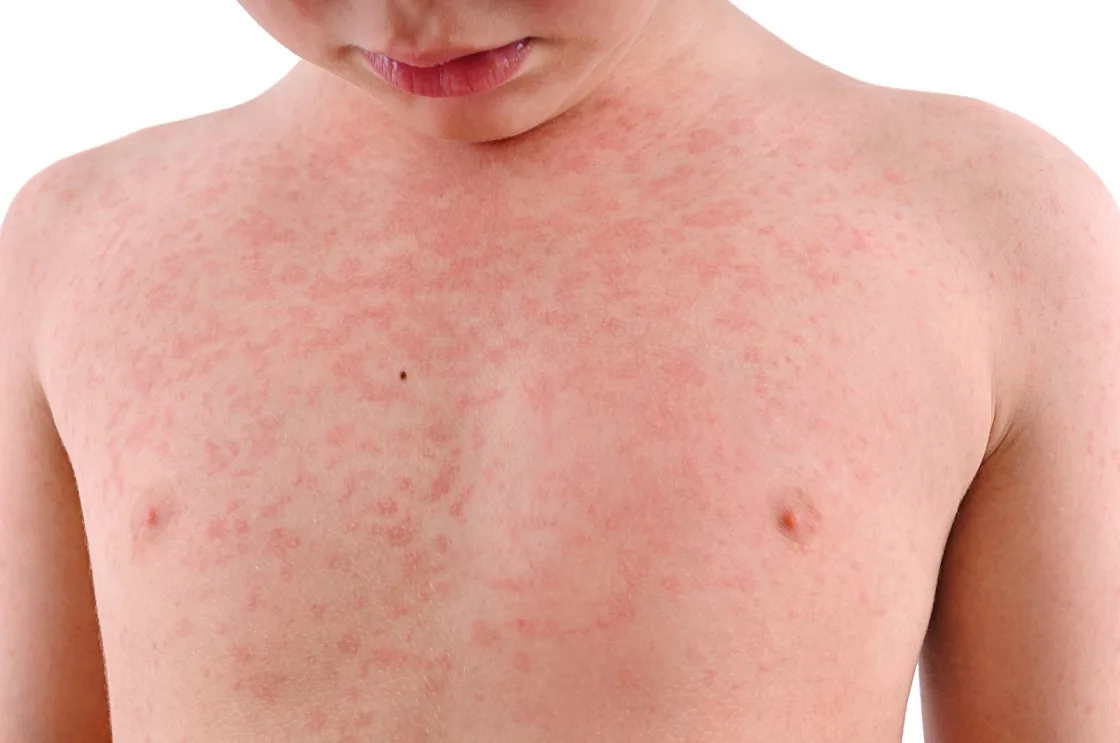
As a parent, it’s a nightmare to see a rash on your child, and it can trigger immediate anxiety. However, identifying and understanding the nature of the rash can make a significant difference. Rashes in children are common, ranging from simple heat bumps to more complex, systemic issues. Knowing when to worry about a rash in a child can help you take proactive steps and ensure timely care.
This comprehensive blog is designed to equip you with the knowledge to identify common skin rashes in children. It provides a detailed understanding of alarming signs and when to seek professional help, ensuring you feel informed and prepared.
Common Skin Rashes in Children
Common childhood rashes, such as red bumps, blotches, or welts, are usually harmless and resolve independently. Understanding these common rashes can help alleviate some of the anxiety associated with them.
- Diaper rash– Red, inflamed patches will appear in the diaper area. These occur because of moisture, irritants, or friction
- Heat rashes (miliaria)—tiny, itchy, red bumps can occur daily in humid or hot climates, caused by sweat trapped under the skin
- Hives– raised, itchy welts appear suddenly due to an allergic reaction, which may resolve within hours
- Eczema– itchy, dry, and scaly patches on arms, cheeks, and legs, part of a broader category of child skin conditions
- Contact dermatitis– red and itchy rashes where the skin has touched an allergen or irritant
While most rashes are not harmful and self-limiting, it is vital to consider the child’s comfort level and overall health. Noting symptoms such as fever or behavior changes will guide you toward better care.
When to worry: Key red flags
Understanding the key red flags about the symptoms and alarming rash characteristics helps you take precautionary actions.
A. Systamatic Symptoms
- Difficulty in breathing or swallowing can indicate infection or a severe allergic reaction
- High fever if persistent between> 100.4°F F/38°C or unresponsive to medication
- Signs of dehydration include no tears, dry mouth, and decreased urination
- Swelling on the face areas, such as lips, eyelids, or tongue, in conjunction with a rash
- Extreme behaviour changes such as confusion, lethargy, or unusual irritability
- Severe headache accompanied by rash or fever
- Light sensitivity or neck stiffness, suggesting meningitis
B. Rash Characteristics
- Painful or itchy rash that leads to severe discomfort, not relieved by home measures
- Rapid spread or purpura, where there will be purple spots or bruising in clusters that do not blanch, which is indicative of purpura or petechiae
- Blister or open sores, especially if infected, such as red, swollen edges, pus
- Rash with high fever, for example, roseola presents a sudden rash as the fever subsides, distinguishing it from an alarming pattern
- Target rash (bullseye), where there will be a circular rash that signals Lyme disease
Observing your child’s health and well-being is as crucial as rash. If there are multiple red flags, seek medical help from Kids Care Pediatric.
Rashes Requiring Attention
A. Viral Rash in Children
- Roseola– there can be a sudden high fever followed by fine, pink rashes as the fever resolves
- Fifth disease (Parvovirus B19)– there will be a slapped cheek appearance, joint pain, and mild fever
- Chickenpox– Itchy and fluid-filled blisters during different stages of healing
- Hand-foot mouth disease– painful mouth sores with red spots on hands and feet
B. Allergic Reaction
- Anaphylaxis is rare but severe. It causes facial swelling, respiratory disease, and a widespread rash that requires emergency care.
- Hives– raised and itchy welts that may shift location and are often allergic
C. Bacterial Infection
- Cellulitis– swollen, red, and warm skin that spreads across the body and can be painful
- Impetigo– there will be honey colored crusty sores, and it is highly contagious
- Scarlet fever– there can be a fine, sandpaper-like rash with sore throat and fever
D. Kawasaki Disease
A rare condition presenting with fever, rash, strawberry-like tongue, red eyes, and swollen hands/feet. In such a case, early intervention helps treat the disease.
Full Body Rash Child No Fever
A full body rash in a child with no fever can still be distressing, and its common causes include the following.
- Mild viral exanthem– early-stage viral rashes can be associated with fever
- Eczema flare-up– uniform and itchy patches without systemic symptoms
- Contact dermatitis– widespread reaction to a new lotion, soap, or detergent
- Heat rash– it happens after sun exposure or overheating
- Responses to drugs– some medications cause widespread rashes and can be non-febrile
Some guidelines need to be followed as part of home guidance. Observe for itching severity, swelling, or behavior changes. Maintain a gentle skin care routine, such as a lukewarm bath and unscented moisturizer. Trim nails regularly and use mittens for infants, which would help prevent skin damage.
Even without a fever, seek medical advice if the rash worsens rapidly, spreads beyond the trunk, causes discomfort or distress, or persists for more than a week without any improvement.
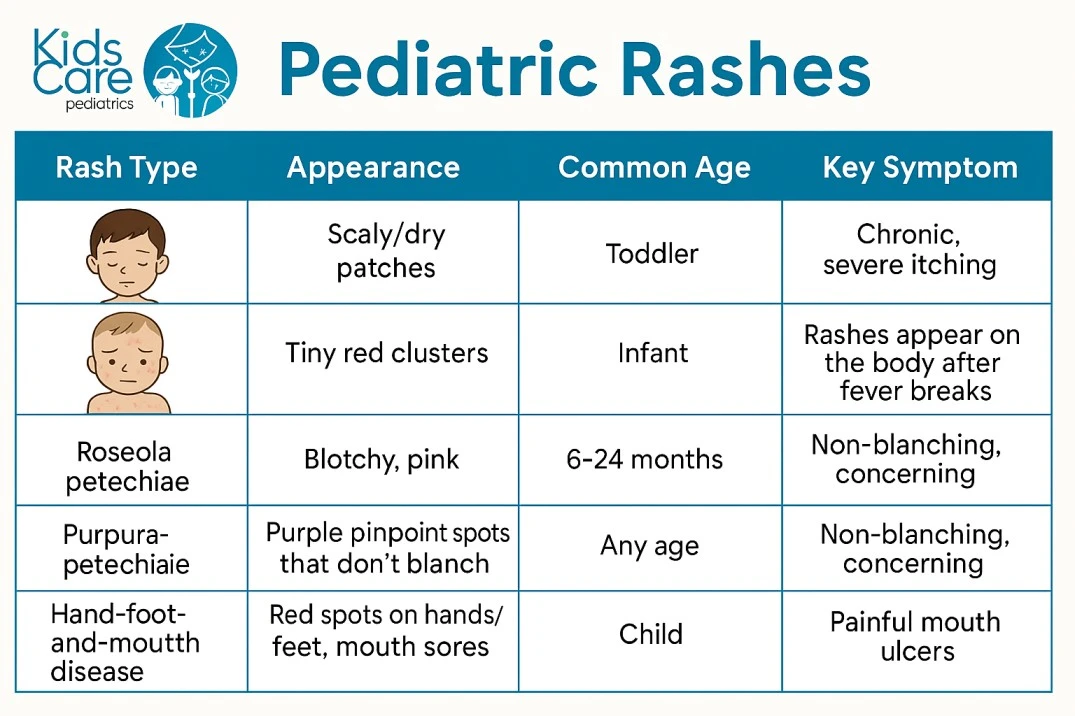
A pediatric rash chart can be a handy visual aid that acts as a guide, not a diagnostic tool.
| Rash Type | Appearance | Common Age | Key Symptom |
| Eczema | Scaly/dry patches | Toddler | Chronic, severe itching |
| Heat rash | Tiny red clusters | Infant | Itchy and worsens with heat |
| Roseola | Blotchy, pink | 6-24 months | Rashes appear on the body after a few breaks |
| Purpura/petechiae | Purple pinpoint spots that don’t blanch | Any age | Non-blanching, concerning |
| Hand-foot-and-mouth disease | Red spots on hands/feet, mouth sores | Child | Painful mouth ulcers |
Final thoughts
Recognizing when to worry about a rash on your child is essential, as vigilance can catch severe conditions early. Children’s most common skin rashes are usually harmless and can be resolved with simple home care. However, non-blanching lesions, systemic symptoms, or blistering require medical attention.
At Kids Care Pediatric, we help you understand the red flags and implement preventive measures. Share your parenthood experience, consult with our Kids Care Pediatric resources, and ensure informed parents help provide healthier and happier kids.
FAQ
1. When should I worry about a rash on my child?
You should be aware if the rash is spreading rapidly, not blanching, or accompanied by fever and unusual behavior; in such a case, contact a pediatrician.
2. What are some common childhood rashes I should not worry about?
Eczema, heat, diaper, and mild viral rashes are widespread, usually harmless, and self-resolving.
3. How can I treat my child’s rash at home?
Use gentle cleansers, keep the skin dry, and use unscented moisturizer, and consult your doctor before applying creams.
4. Does a full-body rash mean something serious?
Contact dermatitis, eczema, or hives cannot always cause full-body rashes without serious illness.
5. Does Kids Care Pediatric provide help with allergic or infectious rashes?
We provide expert evaluation and treatments for infectious rashes in children and different allergic skin conditions.